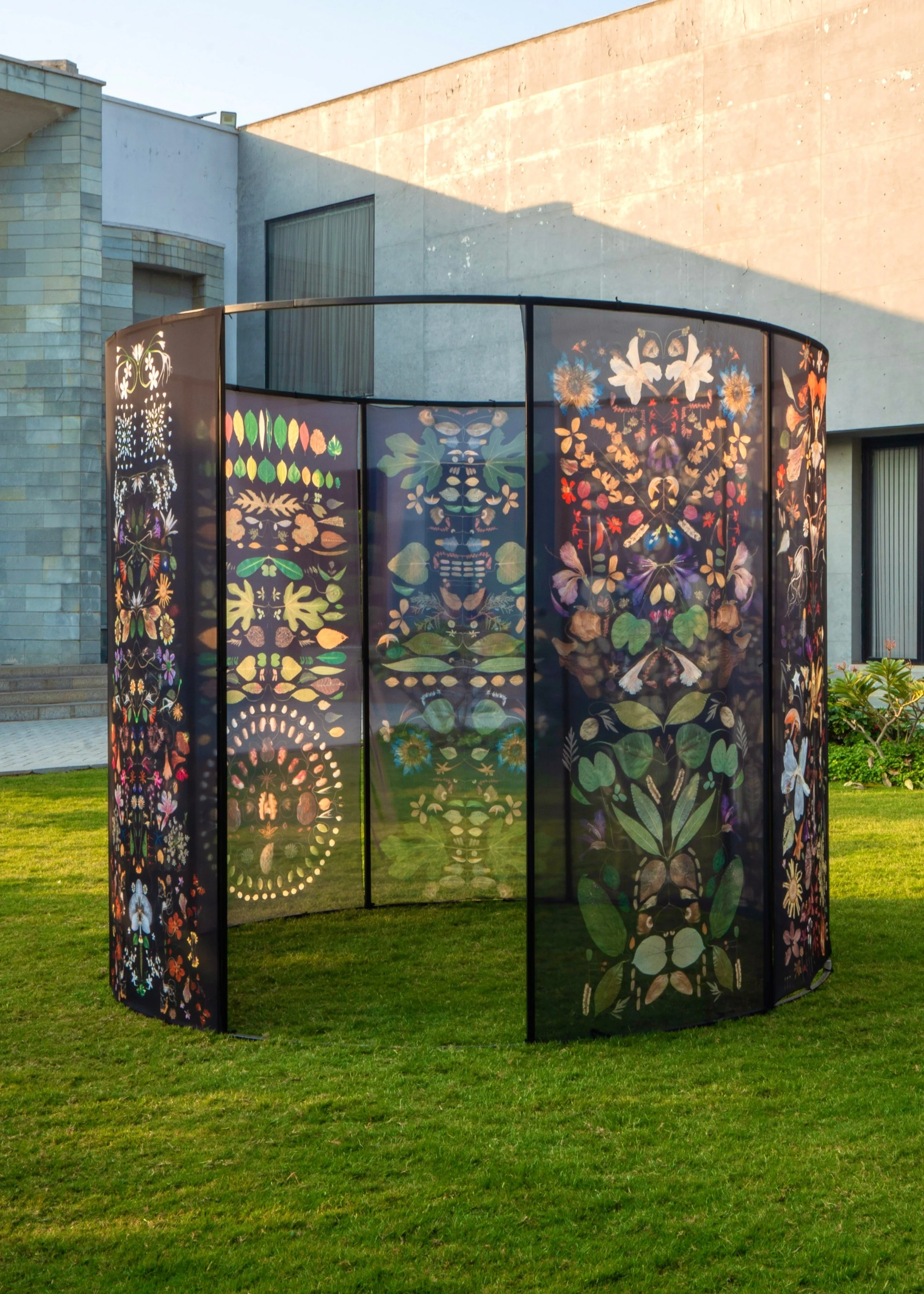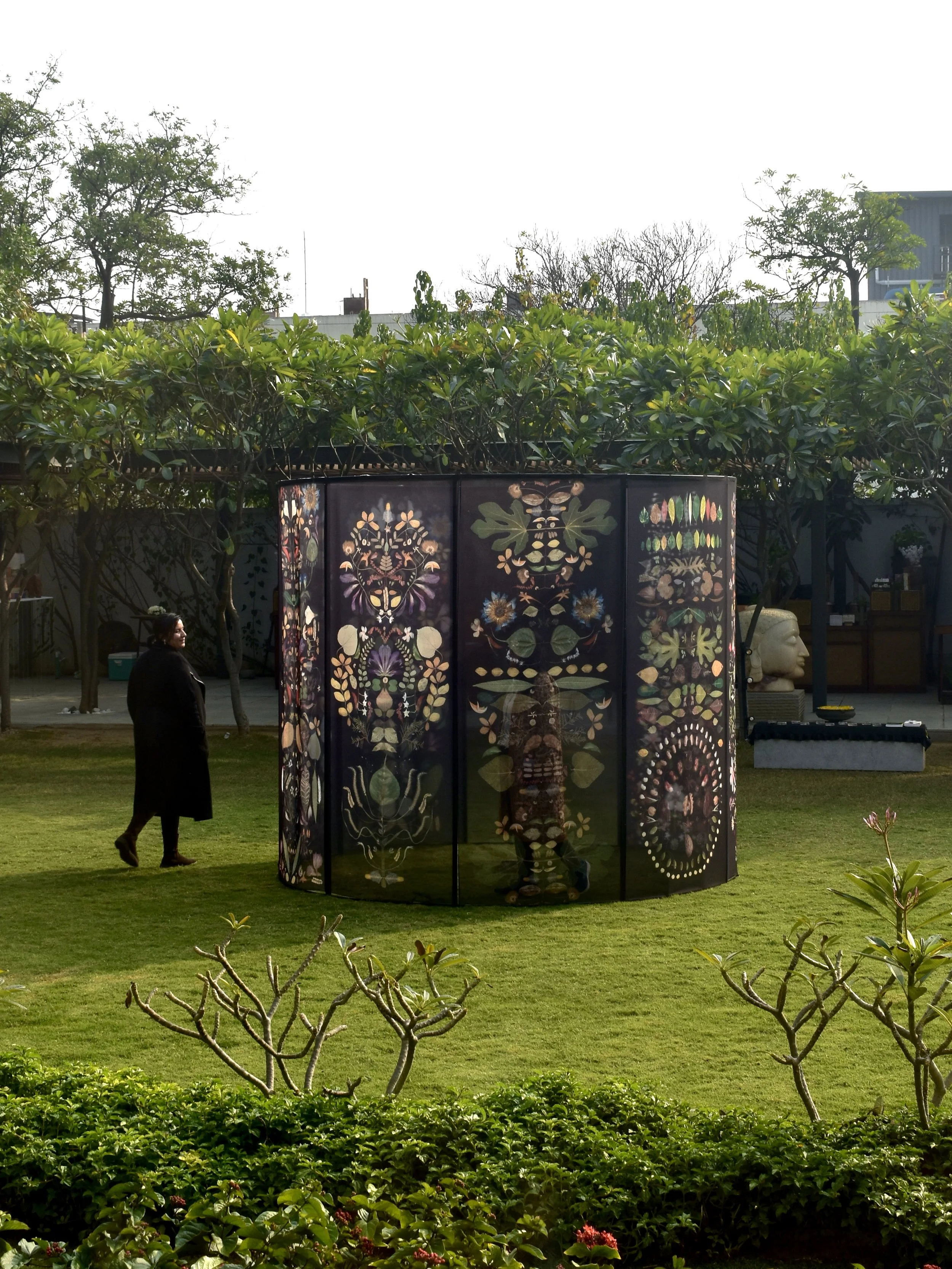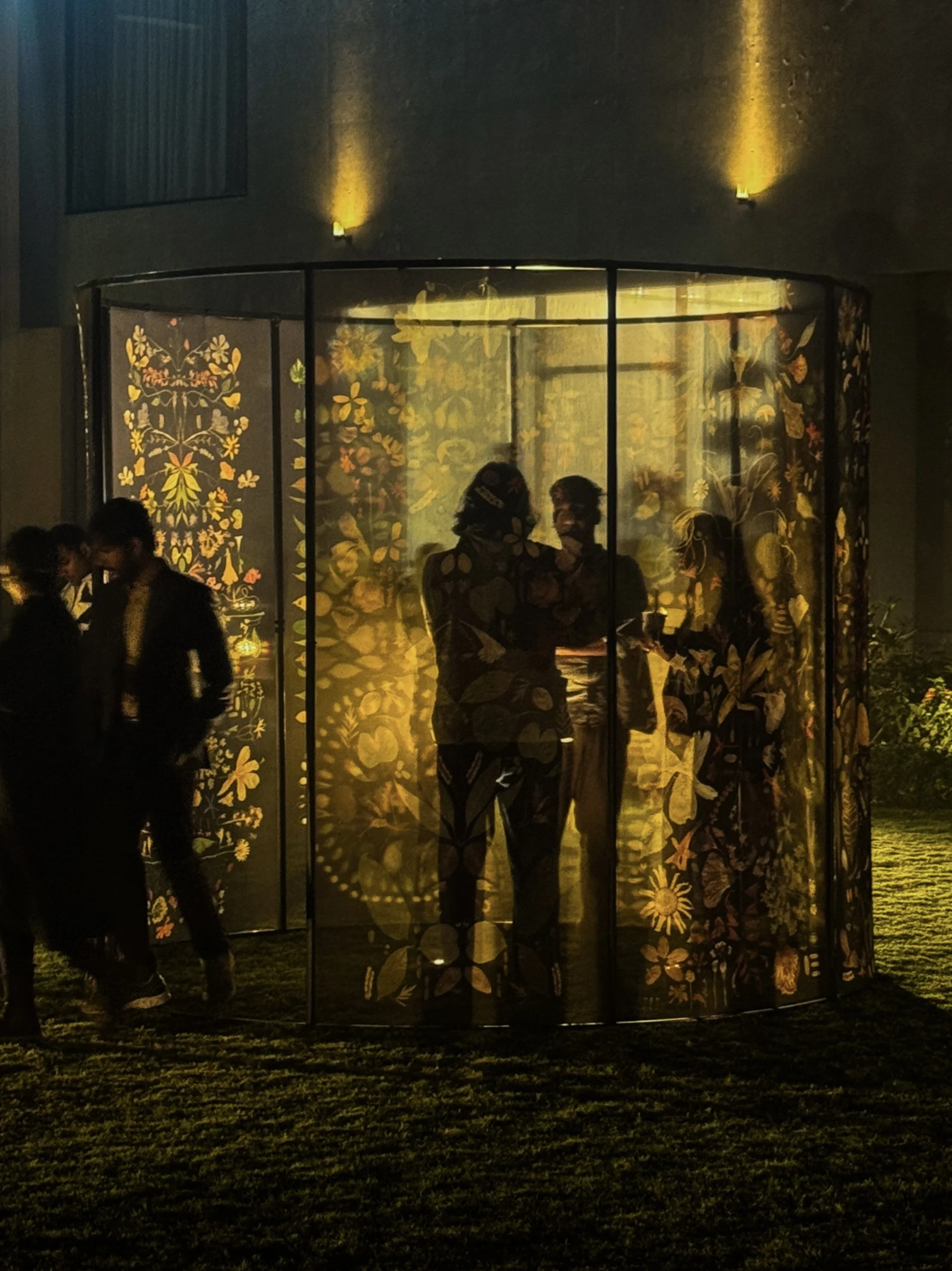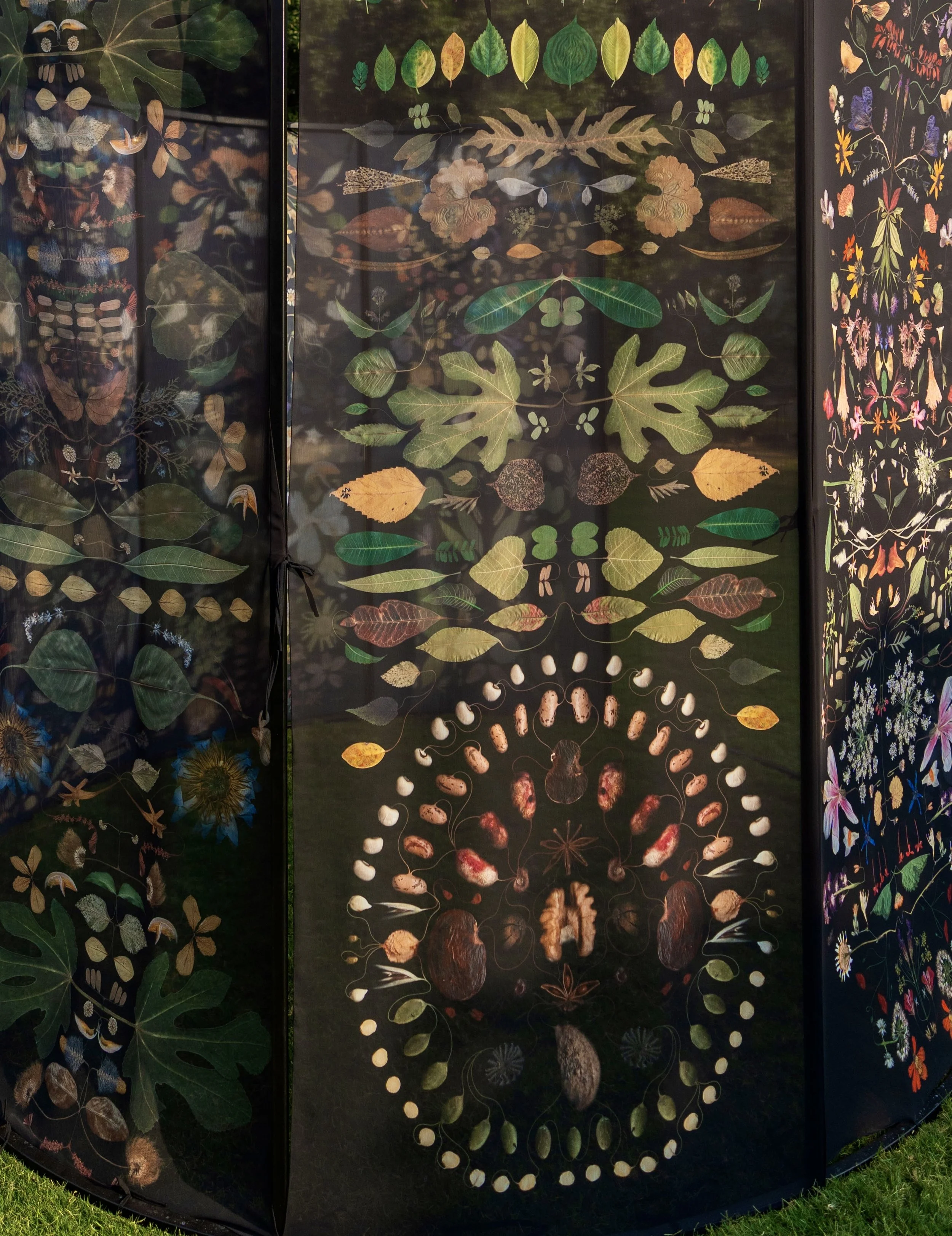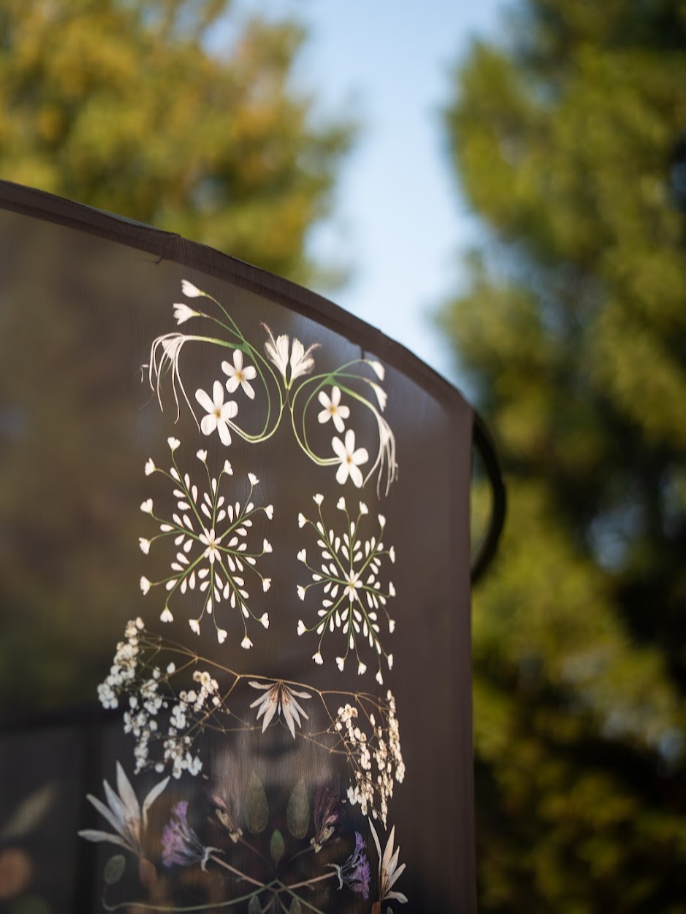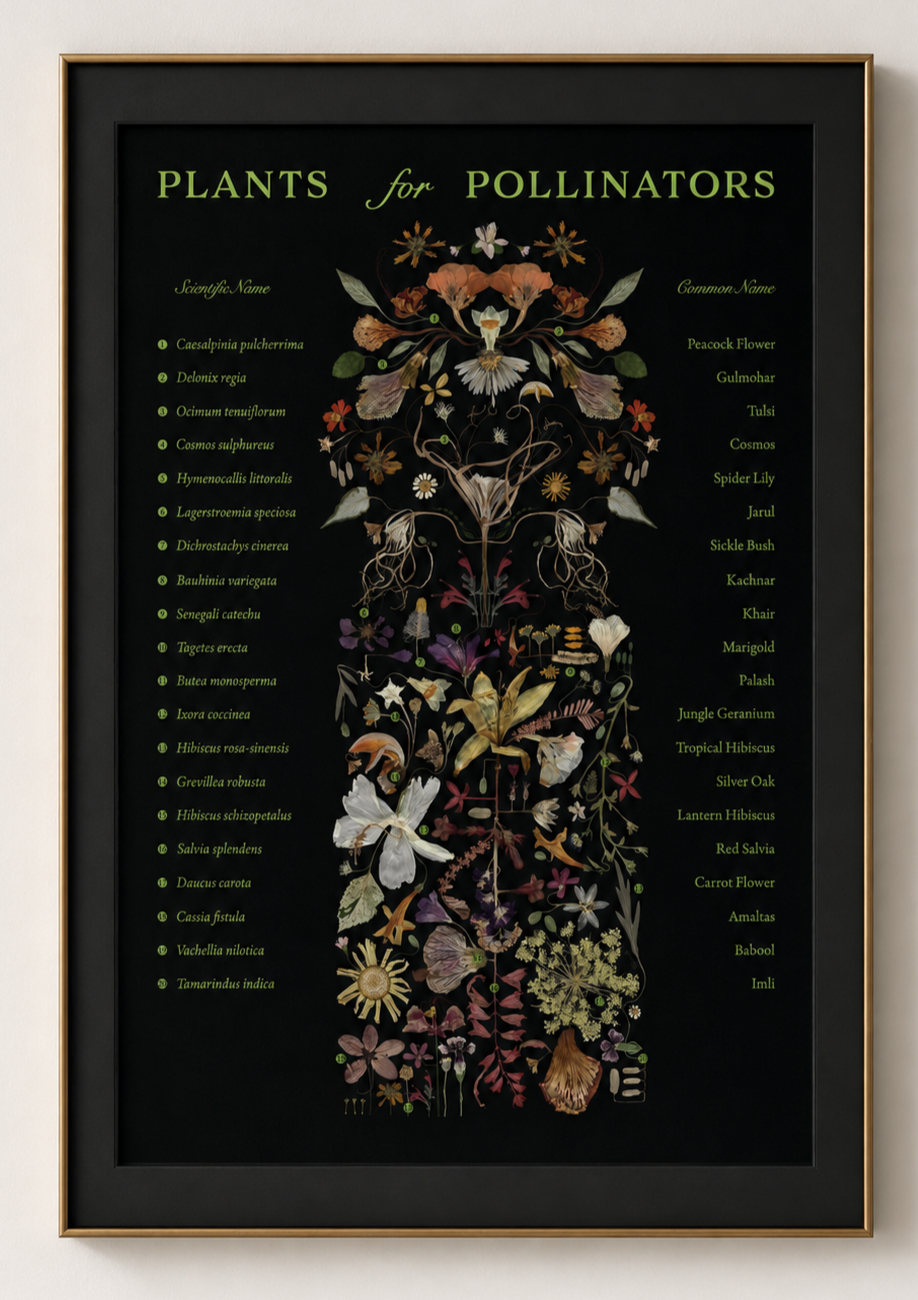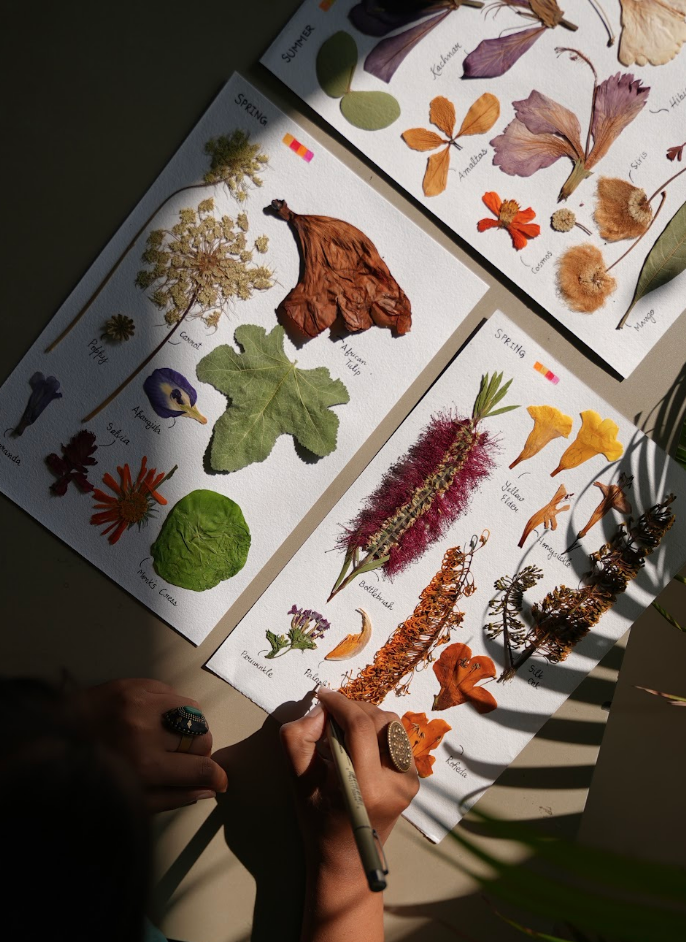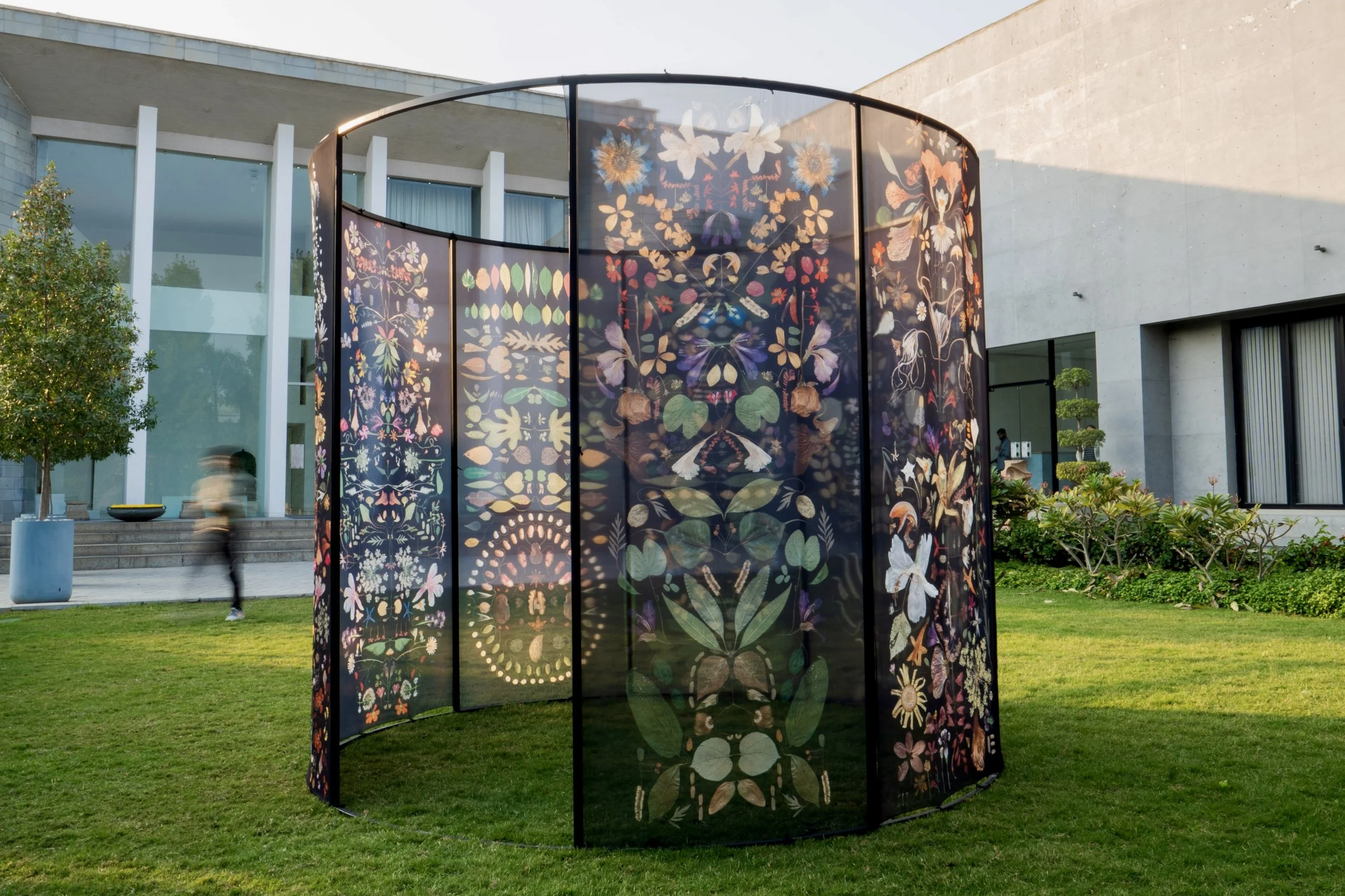
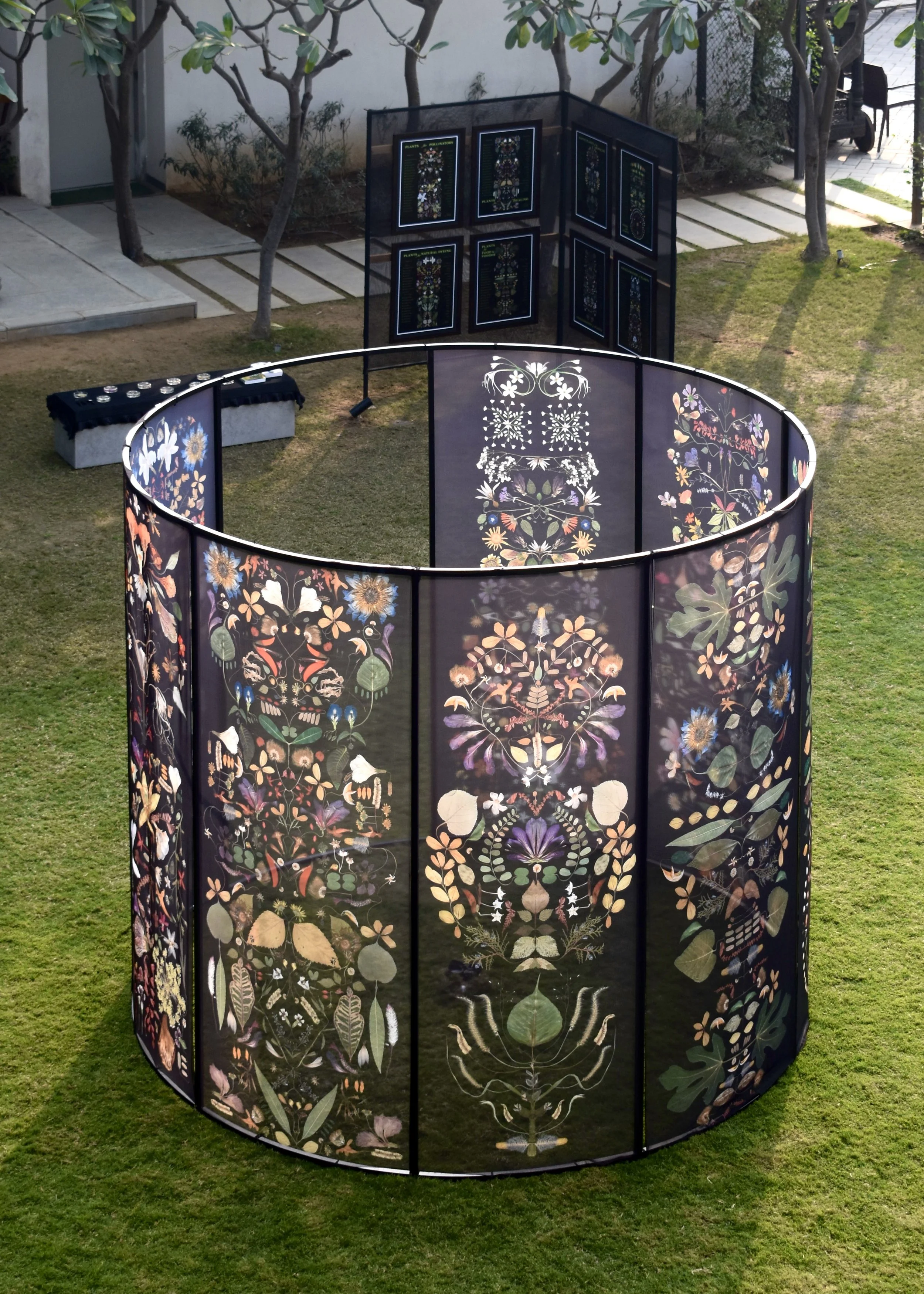
Grounded in an ethnobotanical study of the Aravalli Range in India, one of the oldest fold mountain systems in the world, The Earth Laughs in Flowers explores the relationship between indigenous plants and the communities that live alongside them.
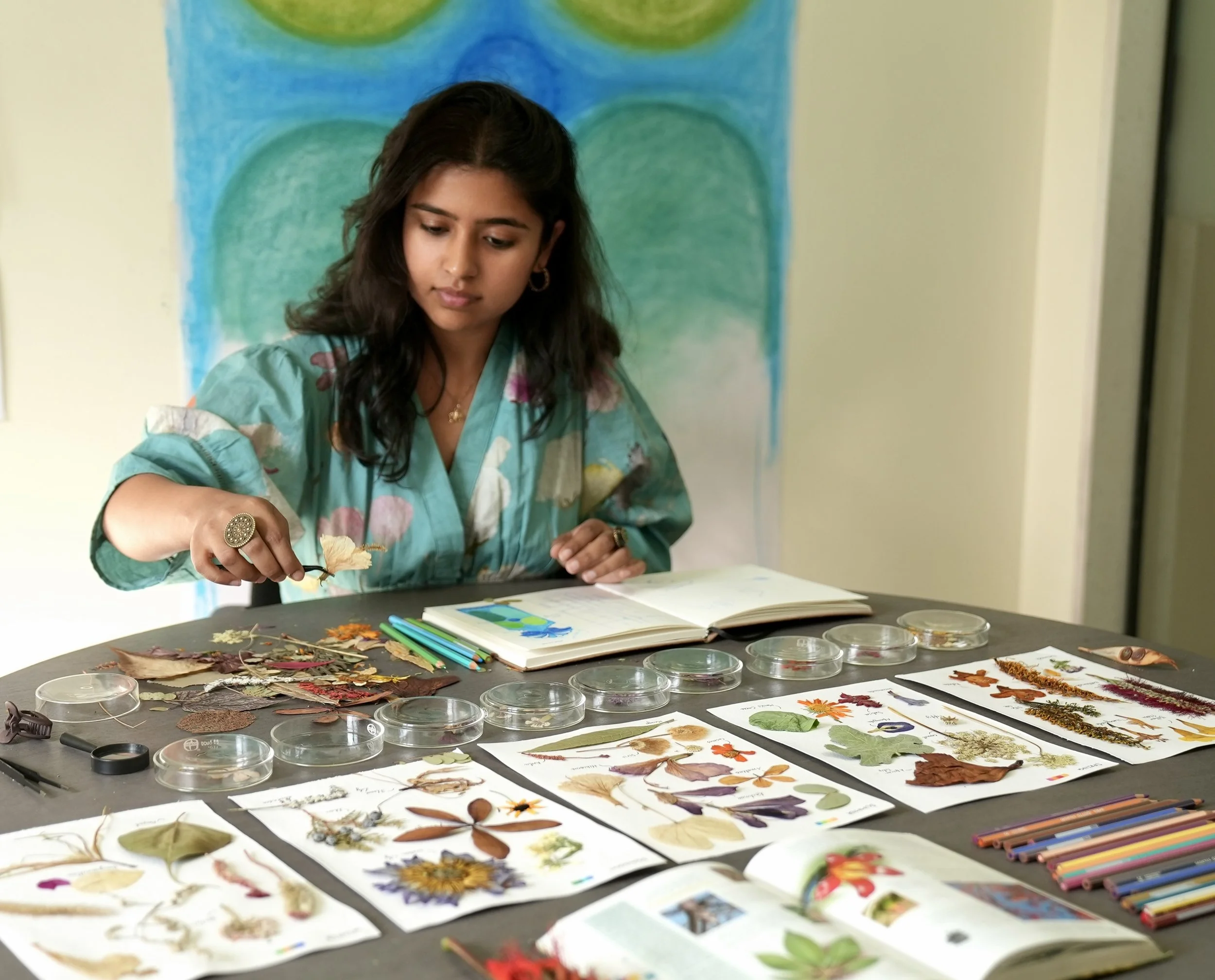
Mapping more than seventy indigenous and naturalized plant species of the Aravallis, the work inquires how plant knowledge might be understood as instruction for the future rather than an artifact of the past.
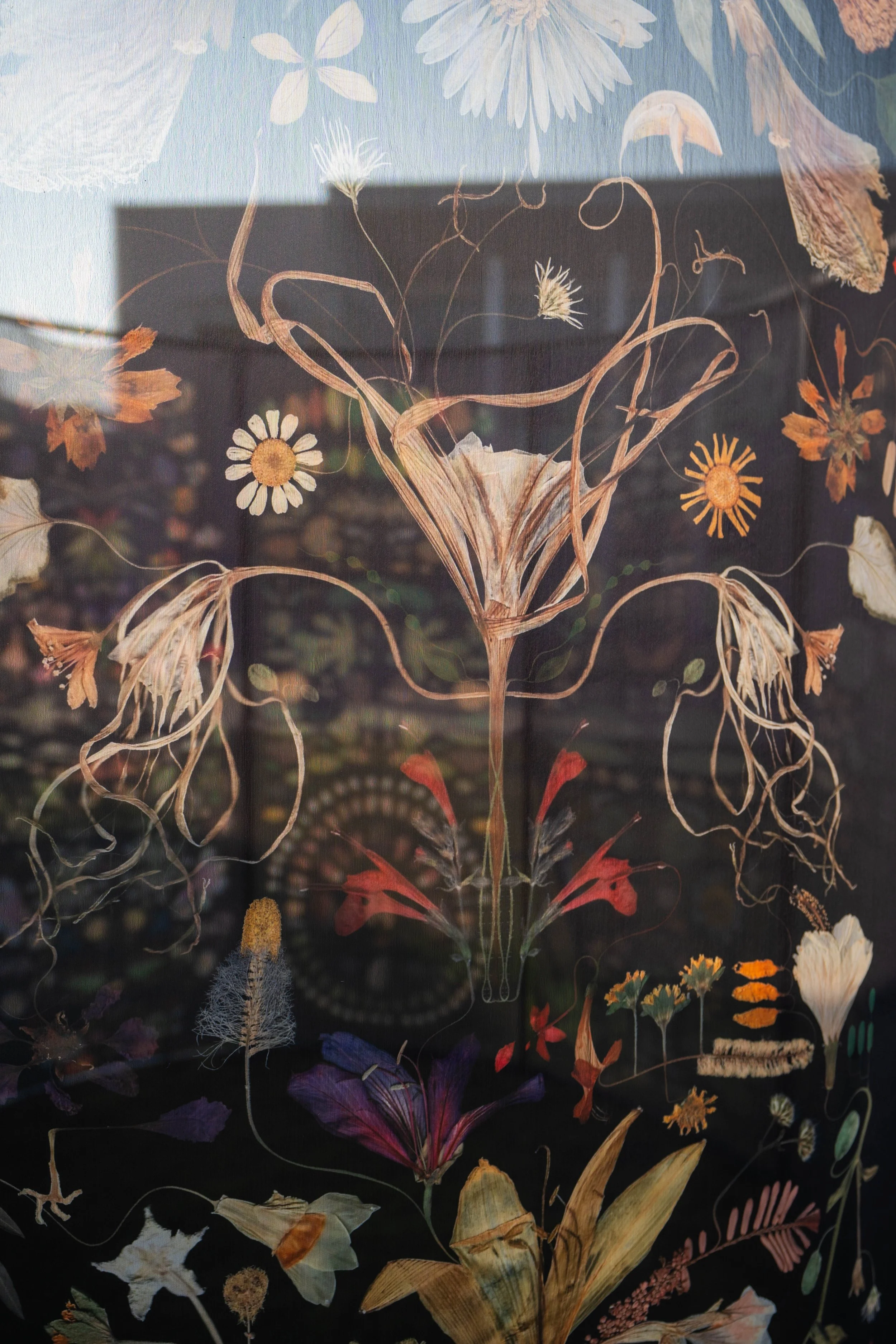
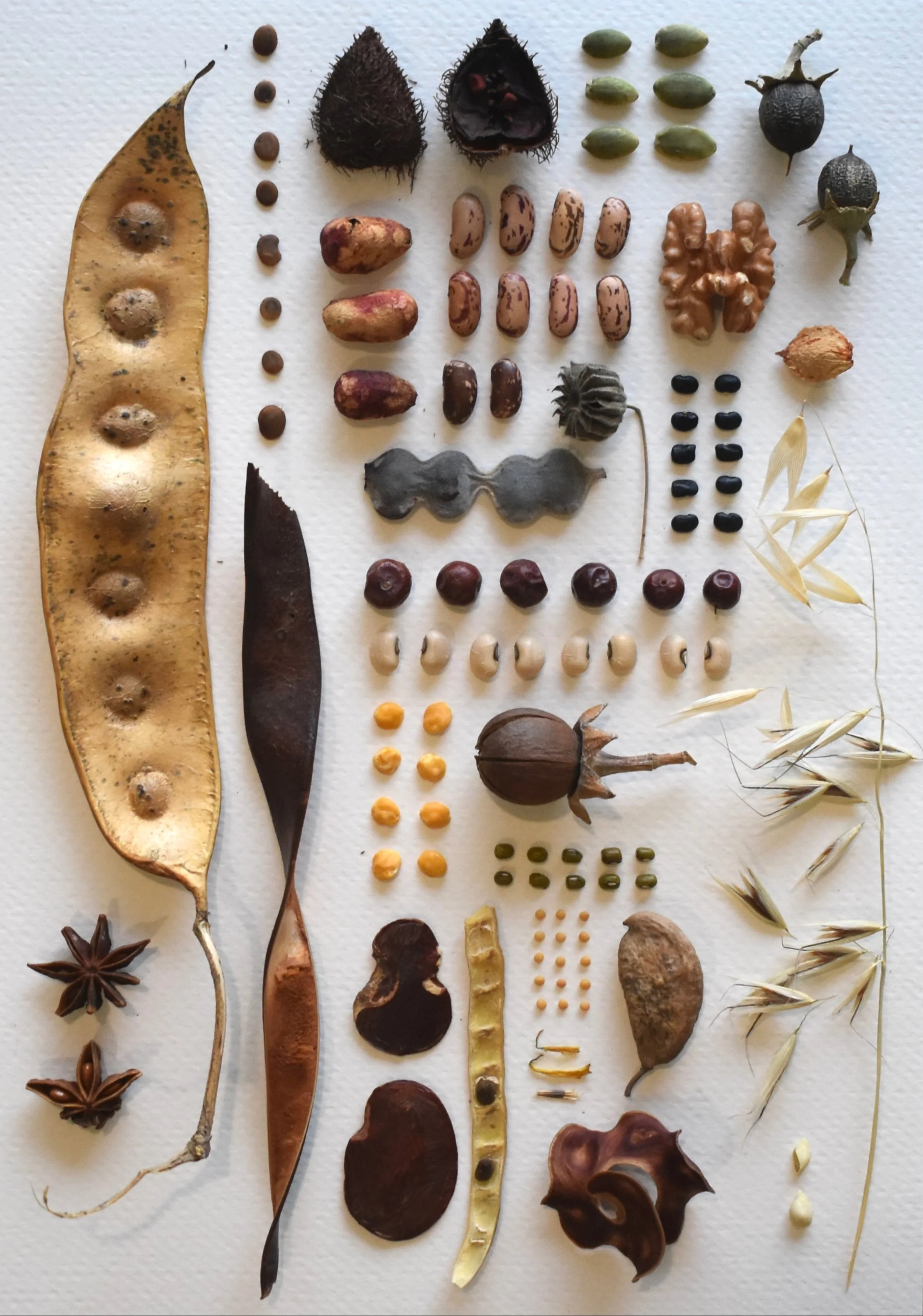
The Earth Laughs in Flowers is a visual taxonomy of use, organizing flora not by ornamental beauty alone but by how they have sustained human life through nourishment, healing, pigments, and pollination. Flowers of the Aravalli Range are presented as repositories of immense, often overlooked wisdom. Species such as dhok (Anogeissus pendula), which grows almost exclusively in this landscape, have long been used in folk medicine, timber, land regeneration, and survival during droughts. Others, like palash (Butea monosperma) and amaltas (Cassia fistula), have been used for natural dyeing, healing, and as vital pollinators for thousands of years.
Functioning as a living botanical archive, the installation reflects the biodiversity of the Aravallis at a moment of increasing erasure, insisting on attention to what remains rooted, what is being lost, and what still longs to be protected.